
Education5 min read
Vitamin B1 Thiamine Supplements: Nerve Function & Cancer Recovery Support
Dr. Vrundali Kannoth

When a cancer diagnosis arrives, questions about treatment options can feel relentless. Cryoablation is a great option here. It is a minimally invasive procedure that uses extreme cold to destroy abnormal or cancerous tissue.
For patients and caregivers trying to understand what this means in practice, it can feel like a lot to take in. Having clear, honest information about this procedure can make an enormous difference.
A large multicenter study on renal cryoablation found survival rates of 90.5% at 3 years and 82.4% at 5 years without recurrence.
This article walks through everything worth knowing about this efficient procedure, when it is recommended, how it works, and what recovery looks like.
Cryoablation, also called cryotherapy or cryosurgery, is a medical procedure that uses sub-zero temperatures to freeze and destroy unwanted tissue.
It causes ice crystals in the water inside cells. These crystals rupture the cell membrane, destroying the cell from within. A controlled thaw follows, causing further damage.
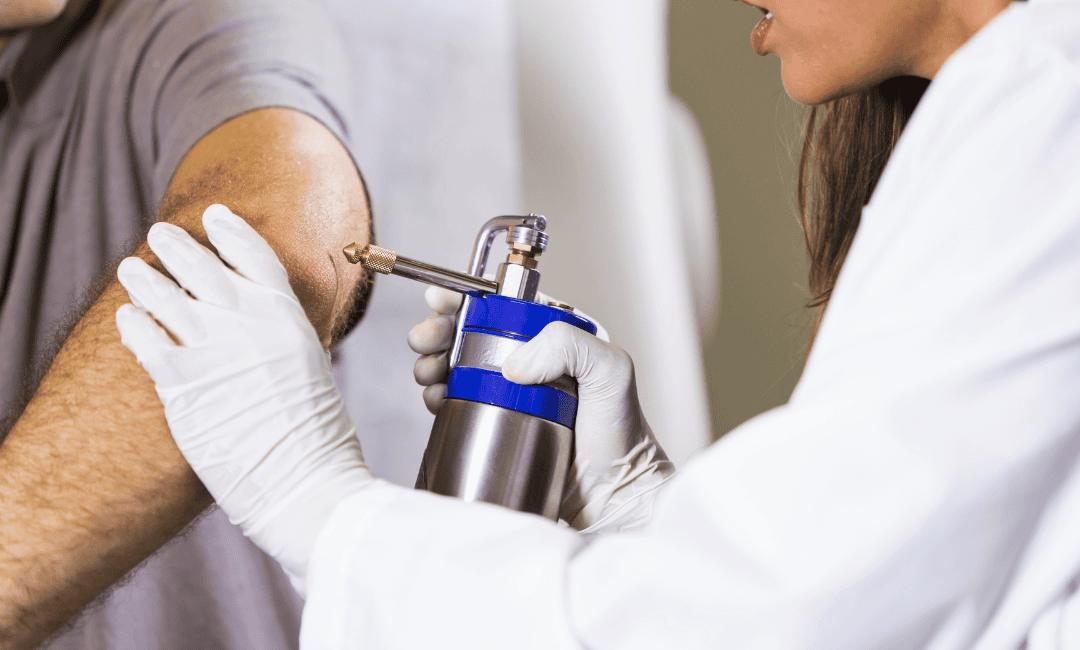
A second freeze cycle further intensifies this effect. What makes this approach notable in interventional oncology is the ability to treat tumours without open surgery.
The cryoablation meaning extends to treat certain heart arrhythmias, chronic pain conditions, and some benign growths. Its role in oncology is where it has grown most significantly over the past two decades.
Oncologists recommend cryoablation treatment when a tumour is well-defined, accessible, and in a location that suits a minimally invasive technique. It is also considered when patients are not suitable candidates for surgery. Here are some top use cases:
Cryoablation for cancer is one of the most established applications of this technology. It is used across several cancer types.
In kidney cancer, cryoablation for cancer is recommended by many oncology guidelines as a primary treatment for tumours smaller than 4 cm.
In prostate cancer, it is used for localised disease, both as a first-line option and for cases where radiation has not been fully effective.
It is also increasingly used in liver, lung, bone, and breast cancers as part of a broader cancer treatment plan.
Cryoablation is also used to treat atrial fibrillation (an irregular heart rhythm), chronic nerve pain, Barrett's oesophagus, and certain benign skin lesions.
In these settings, the goal is relief from symptoms, but the underlying mechanism is the same.
For patients for whom open surgery carries a high risk, cryoablation offers a meaningful alternative.
It can also be used alongside surgical oncology as a complementary approach, depending on what each patient's situation calls for.
The cryoablation procedure is typically performed under local anaesthetic or mild sedation. Understanding the steps involved can help reduce anxiety around what to expect on the day.
Here is a detailed overview of each stage:
| Stage | What happens | Duration |
|---|---|---|
| Pre-procedure preparation | The oncologist reviews imaging scans and marks the target area. A mild sedative or local anaesthetic is administered. | 30-60 minutes |
| Needle/probe insertion | A thin, hollow needle called a cryoprobe is guided to the tumour through the skin, using ultrasound, CT, or MRI imaging. | 15-30 minutes |
| First freeze cycle | Argon gas is released through the probe. The tip drops to a cryoablation temperature of -40°C to -170°C, forming an ice ball around the tumour. | 10-20 minutes |
| Thaw cycle | Helium gas warms the probe, thawing the frozen tissue and causing additional cell death. | 5-10 minutes |
| Second freeze cycle | A second freeze intensifies the damage to cancer cells, significantly improving tumour destruction rates. | 10-20 minutes |
| Probe removal and monitoring | The probe is removed. The patient is observed for any immediate reaction | 30-60 minutes |
Cryoablation treats cancer effectively while being easier on the body for many patients. The advantages range from the procedure and the recovery that follows:
Preservation of surrounding tissue: Cryoablation causes very little damage to the healthy tissue around the tumour. This is important when treating tumours close to vital structures.
Cryoablation carries less risks than open surgery, but patients and caregivers need a clear account of what to watch for.
The cryoablation complications listed below are typically manageable and safe:

The most common cryoablation side effects include mild pain or discomfort, temporary swelling, and fatigue in the days following the procedure. These are expected responses and usually resolve within a week or two.
In a small number of cases, complications can include unintended damage to nearby structures or incomplete tumour destruction, which may need a repeat procedure.
For lung cryoablation, pneumothorax (a small collapse of the lung) is a known risk, managed promptly by the clinical team.
Patients with blood-clotting disorders, blood-thinning medication doses, or those with tumours very close to critical structures may require additional assessment. An oncologist will review these factors thoroughly during the planning stage.
One of the most reassuring aspects of cryoablation is that recovery is typically swift. Understanding recovery helps patients and caregivers feel more prepared and in control:

The cryoablation recovery time for most patients is between 1 and 2 weeks before returning to light activity.
Full recovery is generally expected within four to six weeks, depending on the location of the treated tumour and the patient's overall health.
This cryoablation recovery time is shorter than that for open surgery for the same conditions, which can stretch to several months.
Most patients are monitored for a few hours after the procedure before going home. Rest is advised for the first 24 hours. Mild pain at the probe site is expected and usually managed with standard pain relief.
Knowing what to expect after cryoablation beyond the first day helps reduce anxiety. Mild fatigue is normal in the first week, particularly if post-ablation syndrome occurs.
Light walking is encouraged as tolerated. Most patients are able to resume gentle daily activities within three to five days.
Follow-up imaging is scheduled at 4 to 6 weeks to assess how the treated tissue has responded.
Oncologists will continue to monitor for any signs of recurrence and assess overall health. Depending on the condition, cancer screening test protocols may be recommended at intervals of three to twelve months.
Patients undergoing palliative cancer care may also benefit from cryoablation as part of a pain management plan.
Understanding cryoablation is a step towards feeling more informed, which is an empowering thing to do during the cancer journey.
For those exploring next steps, cryoablation is often most effective as part of a broader, personalised care plan. That might include a conversation with an oncologist, alongside a review of how to prevent cancer recurrence.
Cryoablation technology is also being explored in connection with immunotherapy. This can help with an immune response triggered by frozen tumour cells to enhance the body's ability to fight residual cancer.
Everhope Oncology offers access to experienced oncologists who can assess whether cryoablation is the right fit. We help you approach this procedure with care and dispense advice on how it can fit into your care plan.